Ever had someone in your workplace ask, “What’s with all these security policies?”
Sometimes it feels like the rules keep multiplying. One update after another with no clear reason why. But behind those policies, there is often something bigger guiding them.
There are actual maps yes, full guides, that help organizations like hospitals, tech companies, schools, and banks figure out what to protect and how to do it. These are called cyber defense frameworks. Some well-known examples include the NIST Cybersecurity Framework, CIS Controls, and the MITRE ATT&CK Framework. Each one offers a different way of helping teams stay ahead of threats.
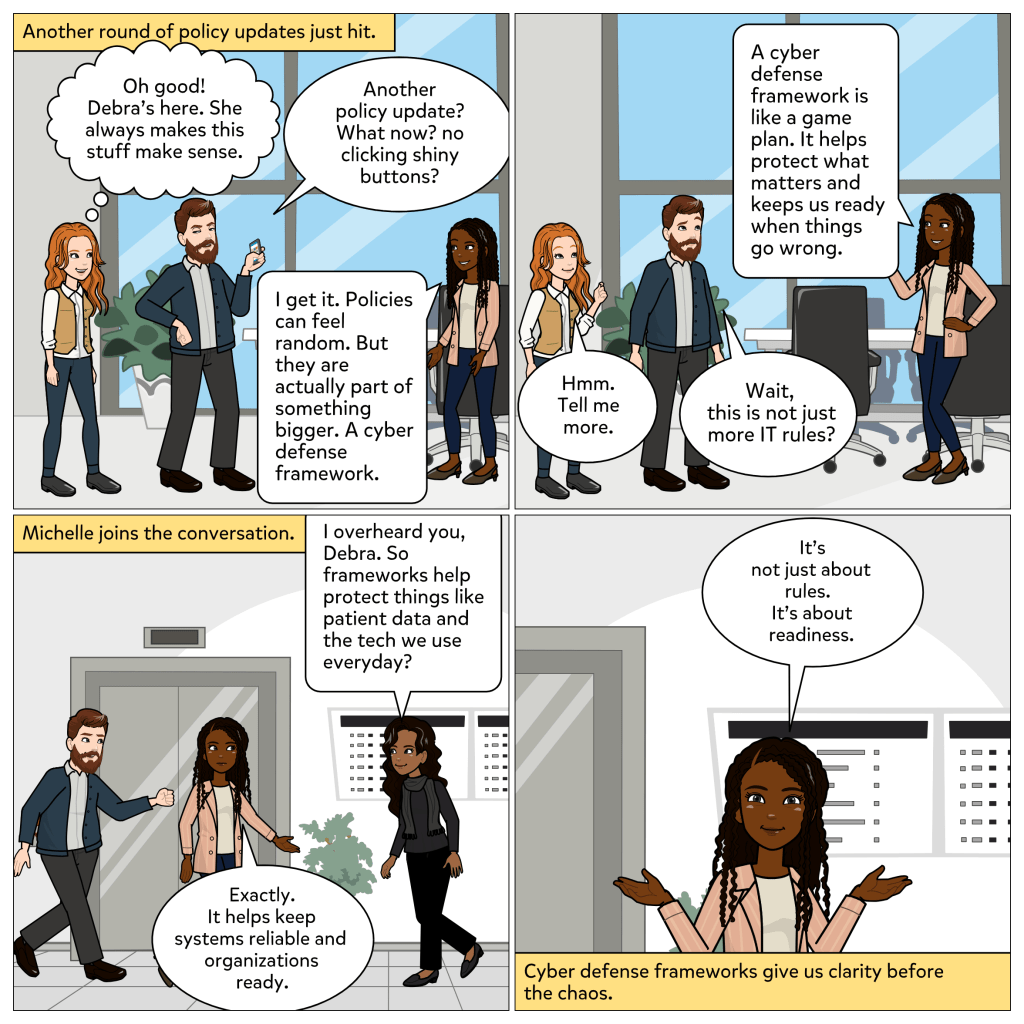
A cyber defense framework is like a game plan. It does not replace your tools or tell you exactly what software to use. Instead, it gives you a smart, thoughtful structure for how to keep your systems, data, and people secure. It helps organizations prioritize what matters most and prepare for what could go wrong before it does. It is about thinking ahead, staying ready, and getting everyone on the same page before things get messy.
What do we need to protect?
How are we protecting it?
If something goes wrong, what’s the plan?
In healthcare, where one security incident could affect care delivery, compromise patient data, or damage trust, having a framework is not just technical. It is critical.
And honestly, you do not have to work in a hospital to relate. We use mini frameworks every day. Think about meal prepping for the week. You decide what to eat, gather ingredients, and prep in advance so you are not scrambling at the last minute. That is a personal version of a framework. It does not mean you never eat out, but it keeps things in order and reduces stress. The same goes for budgets, packing checklists, or even routines for getting kids ready in the morning. It is all about having a plan, not just reacting.
That structure you rely on is your own kind of framework. Cybersecurity works the same way. It is about knowing what matters most and having a plan before things fall apart.
So whether you are working with patient data or just trying to understand what that latest policy means, cyber defense frameworks give us a real advantage. They are how we shift from being reactive to being ready.
Thank you for being here. I hope you’ve subscribed! You don’t want to miss the next episode lol.
Let me know what stood out to you. What do frameworks look like in your world?
Go ahead and share this with a friend or that coworker who’s always asking. They’ll never look at cybersecurity or meal prepping the same way again. 😃
 Cyber With Debra!
Leave a comment