Ever had a day where something small sets off something big?
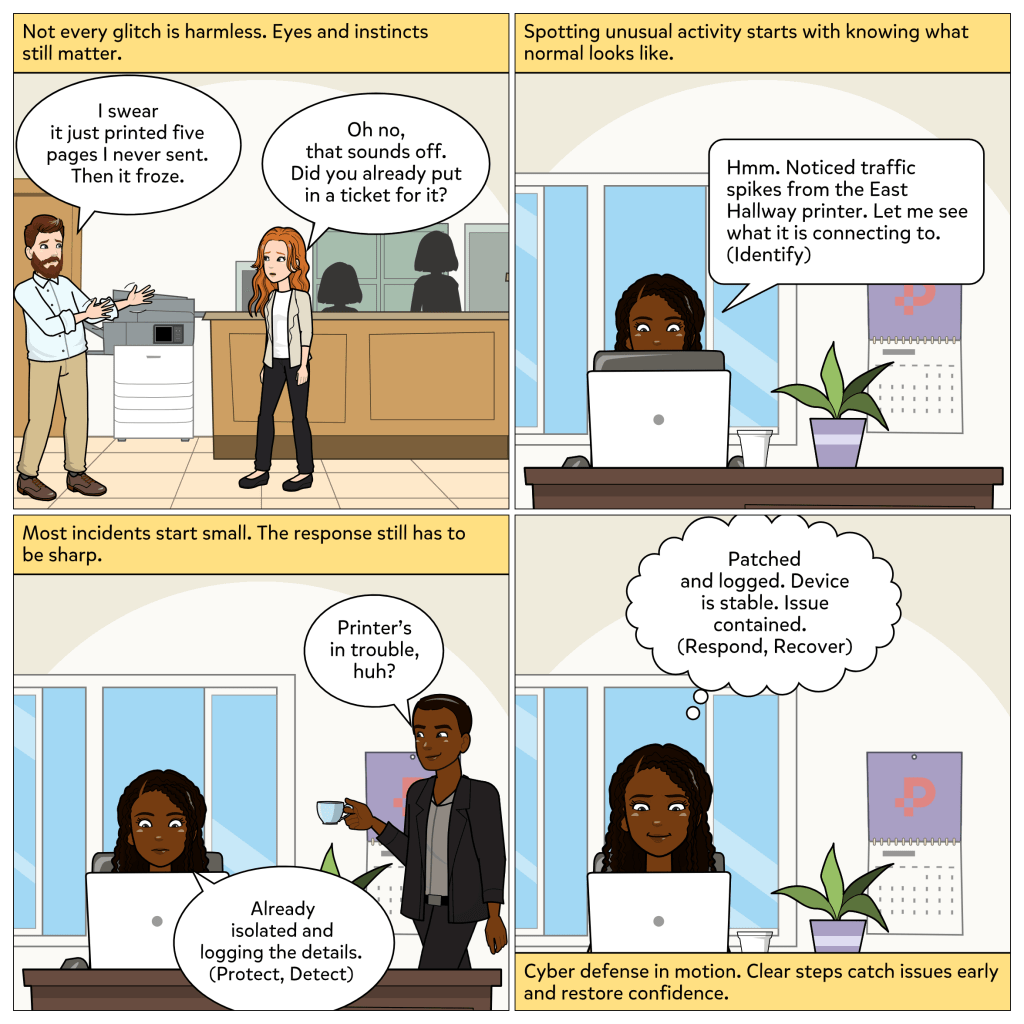
A printer spits out five pages that no one sent. Then it freezes. People shrug. Maybe reboot. But one person looks closer, and that moment changes everything.
In cybersecurity, this is often how it starts. Not with drama. Not with alarms blaring. Just a subtle glitch. A behavior that feels a little off. And that is when having a cyber defense framework really starts to shine.
In this case, the steps Debra takes follow what is called the NIST Cybersecurity Framework. It is a trusted guide used across industries, not just in hospitals or security teams, but by any organization that wants to be smart about risk. The framework includes five core actions: Identify, Protect, Detect, Respond, and Recover.
Let’s walk through them in action.
And if you are not in cybersecurity, stay with me. There is a personal everyday example waiting at the end.
1. Identify
Debra notices unusual network traffic coming from the East Hallway printer. That is not something you notice unless you already know what normal looks like. The Identify step is about having visibility. It is the quiet groundwork that lets you spot trouble early.
2. Protect and Detect
Debra immediately isolates the printer. Why? To keep it from talking to anything else while she checks for deeper problems. This step is part Protect, containing the risk, and part Detect, capturing evidence while it is fresh. It is like pulling a package off a shelf the second you see smoke. You do not wait to confirm the fire. You act, then verify.
3. Respond
Instead of escalating panic, Debra logs the incident and starts remediation. That is what a solid response looks like. Calm, informed, focused on limiting damage.
4. Recover
Finally, the device is patched, stable, and brought back online. No drama. No shortcuts. Just restoration with lessons learned along the way.
That is what a cyber defense framework offers. Structure in the middle of uncertainty. It is not just a checklist. It is a mindset. A way to stay clear and ready under pressure.
And the truth is, you do not have to work in a hospital or technical team to relate. Most of us already use frameworks in everyday life.
Let’s say you are prepping for a big trip.
- You start by checking your itinerary, knowing your must-haves, and confirming important reservations (Identify)
- You pack your bags, double-check your locks, and secure your important documents (Protect)
- You keep an eye out for any travel updates or last-minute changes (Detect)
- The night before your flight, you get a message. The airline rescheduled your departure. So you adjust your ride, rebook your connection, and update check-in plans (Respond)
- After the trip, you think about what worked and what caught you off guard. Next time, you know what to expect and prepare with even more confidence (Recover)
That is the power of a clear plan. Whether in tech or in life, it helps you stay ready.
Let me know what stood out to you.
Have you seen a small glitch that turned out to be something more?
What do these five steps look like in your world?
Thank you for being here.
I hope you have subscribed.
Let’s keep learning and building together. 💡


 Cyber With Debra!
Leave a comment