Intrusion Detection Systems, or IDS, are like the watchful eyes of a network. They do not block traffic the way firewalls do, but they carefully monitor what is coming in and going out. The goal is to spot signs of suspicious or harmful activity and raise the alarm so that security teams can respond.
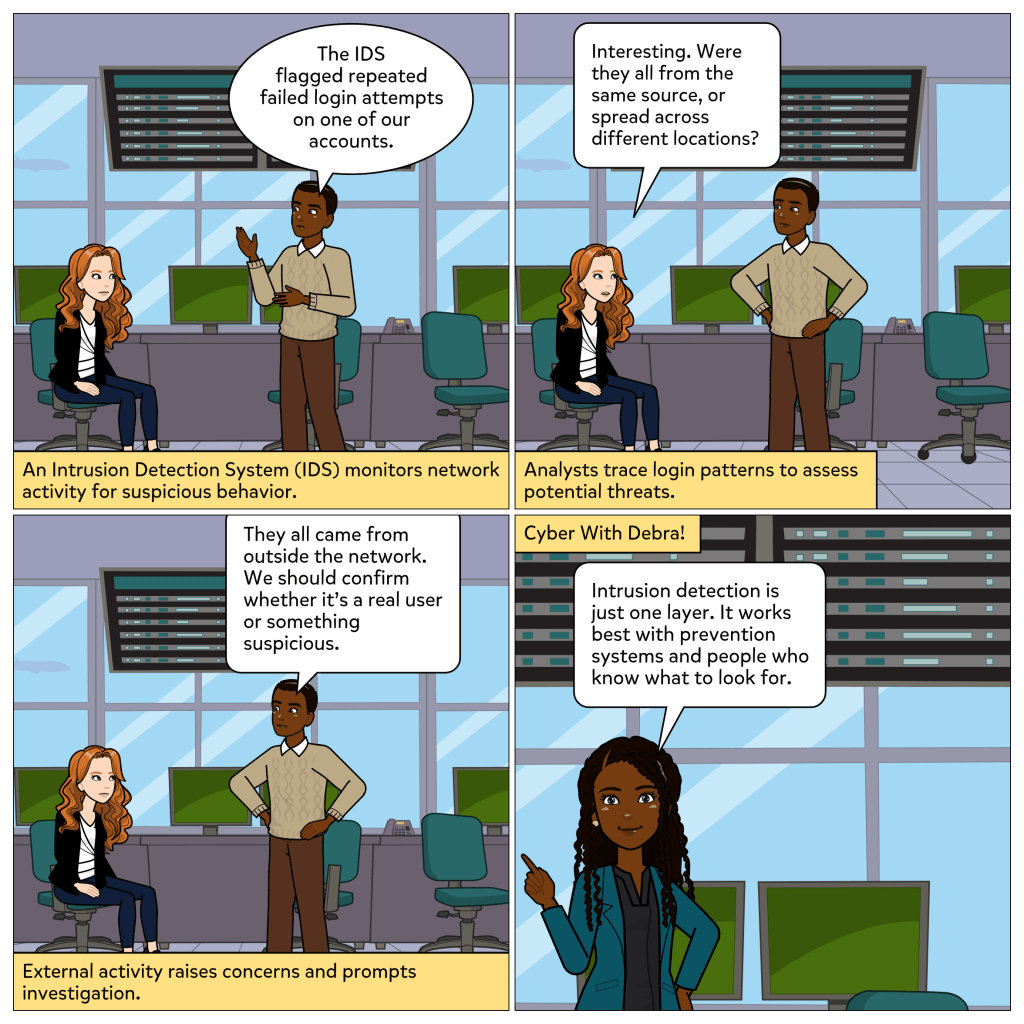
In this week’s comic, the IDS flags repeated failed login attempts on one of the accounts. Brittany asks the right question. Were the attempts coming from the same source or spread across different locations. Ray checks and sees they all came from outside the network. That kind of pattern raises a concern. Debra brings it together, reminding us that intrusion detection is just one layer. It works best when combined with prevention systems and people who know what to look for.
What this means for network security
An IDS is not a wall. It is a sensor. It pays attention to behavior like login activity, changes in traffic patterns, file access, and more, and alerts when something does not match what is expected. That visibility is important because not every threat gets stopped at the door.
Sometimes attackers get in through stolen credentials or by hiding inside normal-looking traffic. That is where detection matters. IDS helps identify the things that might otherwise go unnoticed.
It plays a different role from other tools in the network security toolbox. Firewalls are about control. Encryption is about confidentiality. Traffic analysis is about patterns. IDS is about awareness.
And when something suspicious is spotted, analysts step in. They investigate the alert, look at the surrounding activity, and decide whether a response is needed. That human layer is just as important as the technical one.
Working together with other tools
Intrusion detection is most powerful when it is part of a bigger picture. It works well with systems that prevent, systems that respond, and systems that recover. That includes intrusion prevention systems, endpoint protection, logging tools, and response plans.
When combined, these tools and practices create defense in depth. Even if one layer misses something, another can catch it. IDS plays a key part in that because it shows what is happening in real time and provides context that helps teams make informed decisions.
Everyday takeaway
Think of it like a security camera in your home. It will not stop someone from trying the door, but it will let you know if something unusual is happening so you can act. That alert can make all the difference in catching problems early and keeping the rest of your defenses strong.
Intrusion detection is awareness. Awareness is control. And in security, control makes all the difference.
Thank you for reading. I hope you have subscribed. Let me know in the comments what part of the series has stood out to you the most. 😃
 Cyber With Debra!
Leave a comment