In cybersecurity, we spend a lot of time talking about prevention, with firewalls, encryption, segmentation, and endpoint security. But what happens when something slips through? That is where incident response comes in.
Incident response is the plan for how teams identify, contain, and recover from security incidents. It is not about panicking when something unusual happens. It is about having a process that keeps small problems from turning into major disasters.
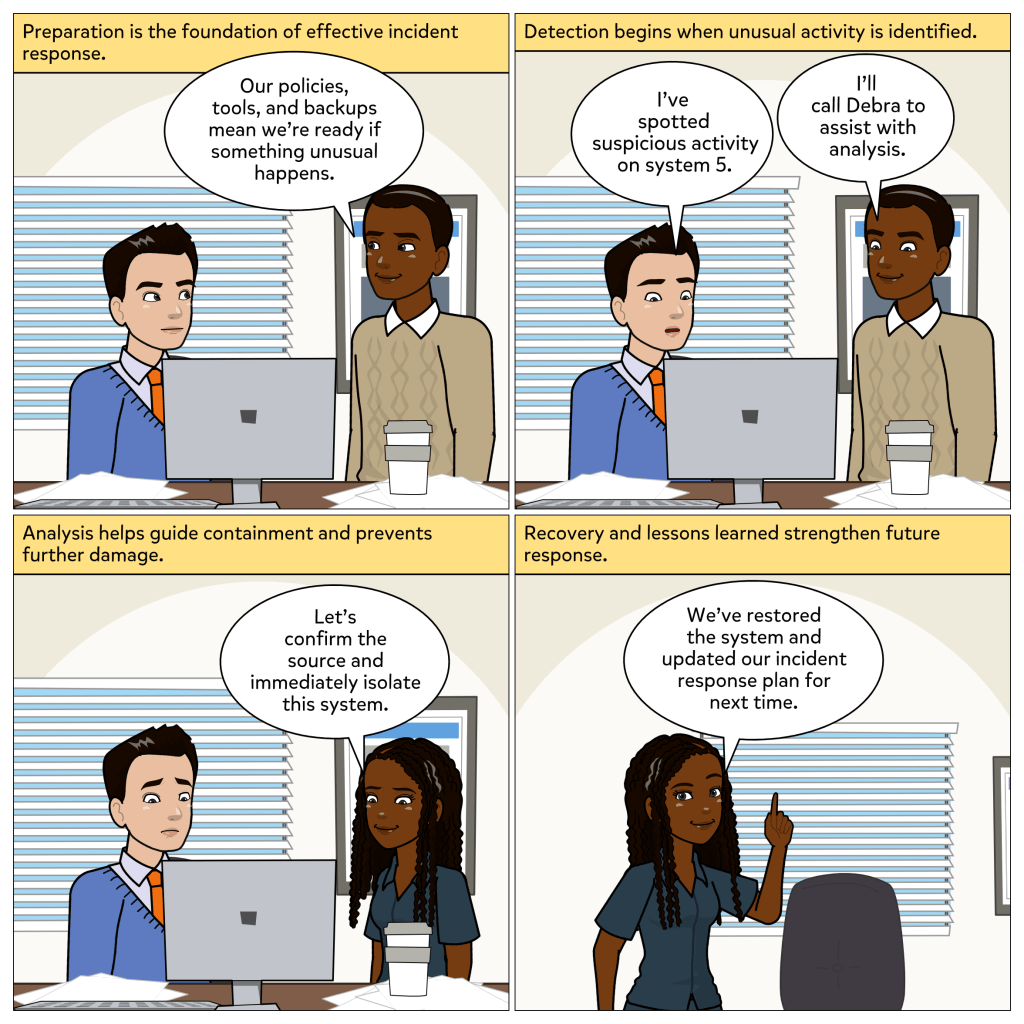
In this week’s comic, the team walks through the flow of incident response, showing how preparation, detection, analysis, containment, recovery, and lessons learned all come together.
Preparation
Preparation is the foundation. Policies, tools, and backups put you in a stronger position before an incident ever happens. Without preparation, every response is slower and riskier. Being ready makes all the difference.
Detection
The response process really begins when suspicious activity is identified. That could be an alert from a system, unusual behavior spotted by an analyst, or even a report from a user. Early detection buys time. The sooner something is noticed, the faster a response can begin.
Analysis and Containment
Once something is detected, the next step is to confirm what is happening and take action to stop the spread. This is where analysis comes in. Logs are reviewed, alerts are examined, and the team decides how to contain the problem. Containment prevents a local issue from becoming a system-wide crisis.
Recovery and Lessons Learned
Once the immediate problem is contained, recovery focuses on restoring systems and making sure they are safe to use again. But recovery is not the end. A strong incident response plan always includes lessons learned. Each incident becomes an opportunity to strengthen the process so the team is better prepared next time.
Everyday takeaway
Think of it like handling a kitchen fire. Preparation means having a fire extinguisher. Detection is noticing smoke or flames. Analysis and containment is grabbing the extinguisher and putting out the fire before it spreads. Recovery is cleaning up and replacing what was damaged. Lessons learned might be updating the smoke detectors or storing flammable items more safely.
Cybersecurity incidents may look different, but the principle is the same. Preparation and process turn chaos into control.
Thank you for reading. I hope you have subscribed. Let me know in the comments what part of the response process stood out to you the most. 📝
 Cyber With Debra!
Leave a comment