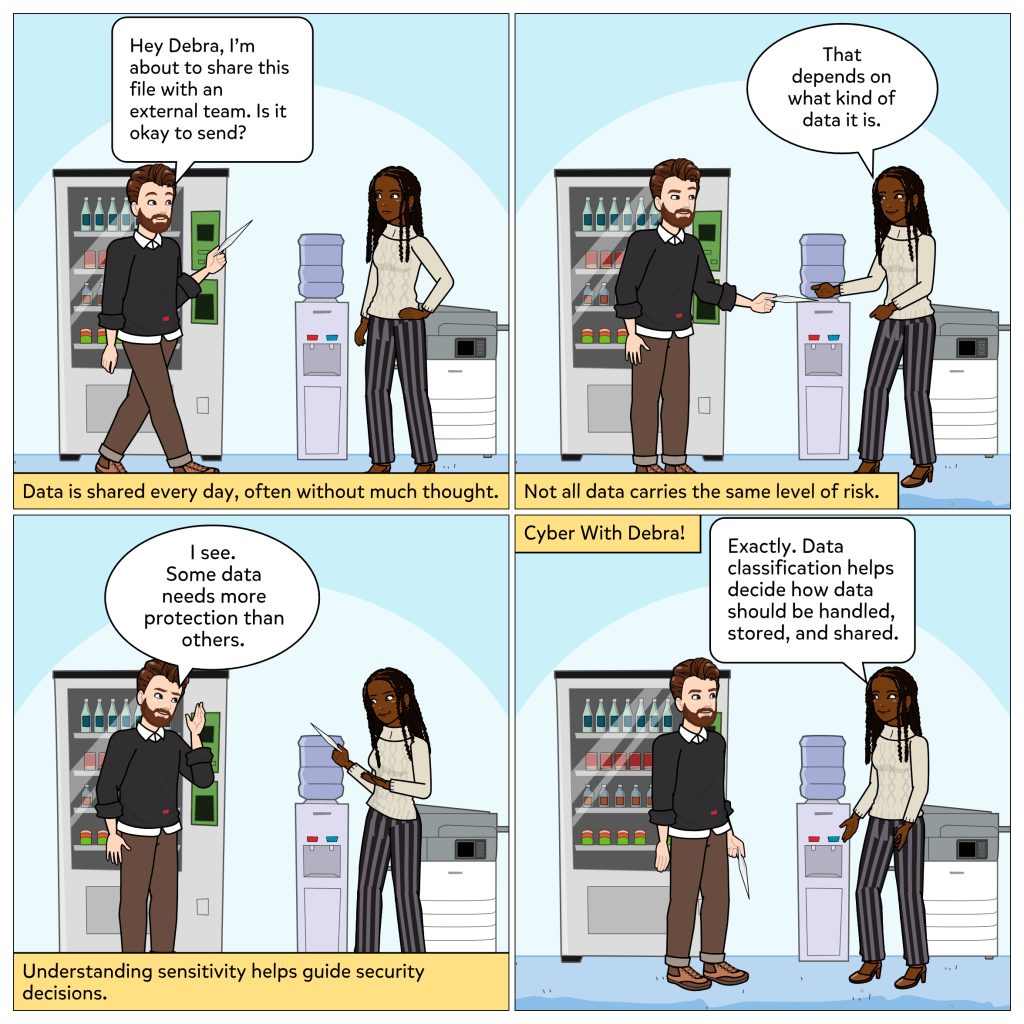
Data is shared every day, often without much thought. Files are emailed, uploaded, and forwarded as part of normal work. But not all data should be treated the same way, and that is where data classification comes in.
Data classification is the process of identifying how sensitive information is and deciding how it should be handled, stored, and shared. Some data can be shared freely. Other data requires extra care, tighter controls, or approval before it leaves an organization.
In this week’s comic, Jake mentions that he is about to share a file with an external team and wants to know if it is okay to send. Debra explains that the answer depends on what kind of data it is. Jake realizes that some data needs more protection than others. Debra ties it together by explaining that data classification helps guide those decisions so information is handled appropriately.
What data classification does
Data classification creates clarity around information and reduces guesswork.
With data classification, organizations can:
• Identify sensitive information before it is shared
• Apply the right level of protection to different types of data
• Reduce the risk of accidental exposure
• Support compliance with privacy and security requirements
• Help employees make better decisions when handling information
When people understand what kind of data they are working with, they are less likely to overshare or make assumptions.
Why it matters
Many data incidents do not start with an attack. They start with a simple mistake. Someone shares a file they thought was harmless, only to realize later that it contained sensitive information.
Data classification helps prevent those moments by setting expectations ahead of time. It provides a shared understanding of what data is public, internal, confidential, or restricted. When that understanding is in place, security becomes part of everyday work rather than an afterthought.
In environments like healthcare, finance, and education, data classification is especially important because the information being handled directly impacts people’s lives, privacy, and trust.
Everyday takeaway
Think of data classification like sorting important documents at home. Some papers can sit on your desk. Others belong in a locked drawer or safe. You do not treat everything the same because not everything carries the same risk.
Security works the same way. When you know what kind of data you are handling, you know how careful you need to be.
Thank you for reading. I hope you have subscribed. Let me know in the comments how your organization decides what data can be shared and what should stay protected. 📁
 Cyber With Debra!
Leave a comment