Security does not start with tools or controls. It starts with knowing what you are actually responsible for protecting.
Many organizations rely on a wide range of devices, systems, applications, and services to operate. Over time, it becomes easy to lose track of what exists, who owns it, and how critical it is to daily operations. When that happens, security decisions are often made with incomplete information.
Asset management helps close that gap by giving organizations a clear understanding of what they rely on and where security efforts should be focused.
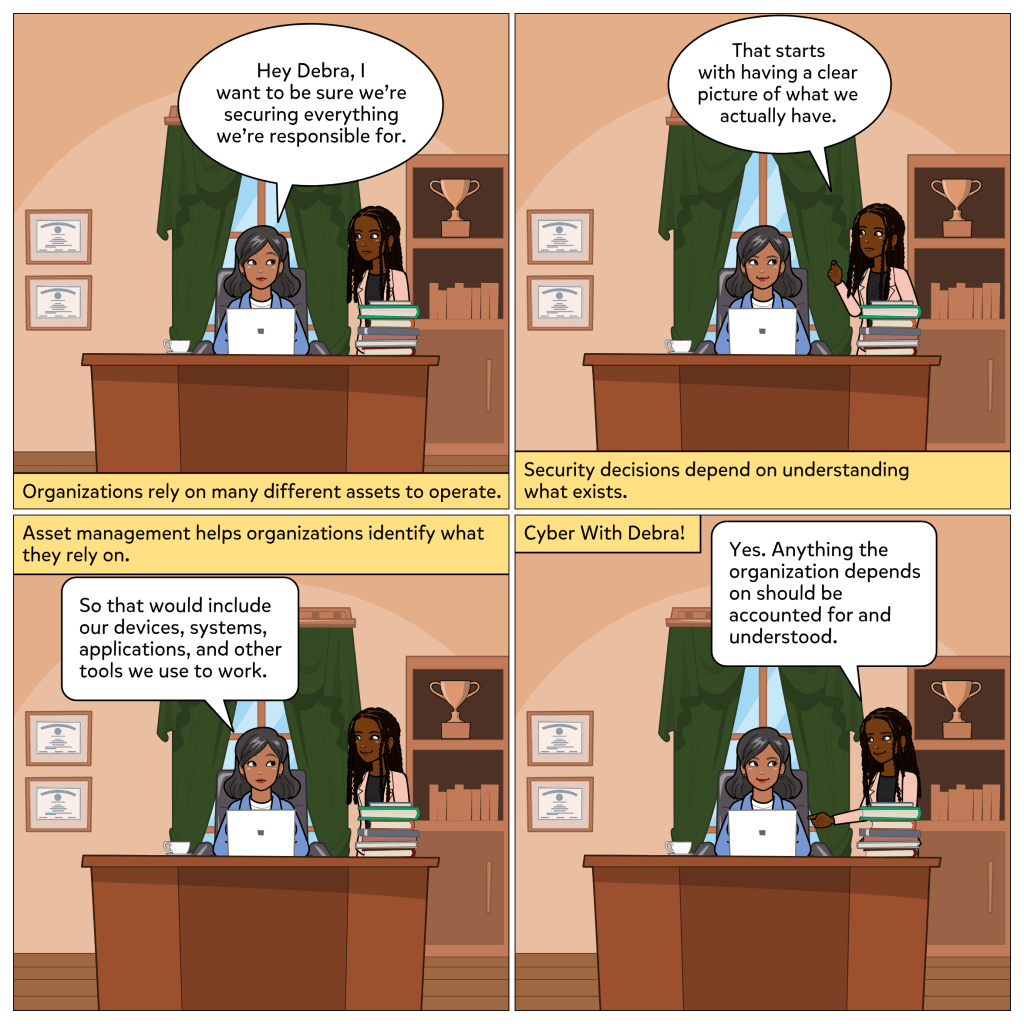
In this week’s comic, Sabrina wants to make sure the organization is securing everything it is responsible for. Debra explains that the first step is having a clear picture of what actually exists. Together, they talk through how devices, systems, applications, and tools all count as assets. Debra reinforces that anything the organization depends on should be accounted for and understood.
What asset management does
Asset management is the practice of identifying, tracking, and maintaining an inventory of organizational assets. These assets can include hardware, software, data, and supporting systems.
With effective asset management, organizations can:
• Understand what devices and systems are in use
• Assign ownership and responsibility
• Identify which assets are most critical
• Apply security controls consistently
• Reduce blind spots that attackers can exploit
You cannot protect what you do not know exists.
Why it matters
Many security incidents begin with forgotten or unmanaged assets. An old server, an unused application, or an untracked device can become an easy target because it is not monitored or updated.
In industries like healthcare, finance, and public service, unmanaged assets increase the risk of data exposure, downtime, and compliance issues. Asset management helps ensure security decisions are based on reality, not assumptions.
When organizations know what they have, they can make smarter choices about protection, monitoring, and response.
Everyday takeaway
Think about your own responsibilities. It is hard to keep something safe if you are not aware of it or do not understand its importance.
Cybersecurity works the same way. Visibility creates accountability, and accountability enables protection.
Knowing what you are responsible for is the foundation of good security.
Thank you for reading. I hope you have subscribed. Let me know in the comments how organizations can improve visibility into the systems they rely on most. 📋
 Cyber With Debra!
Leave a comment