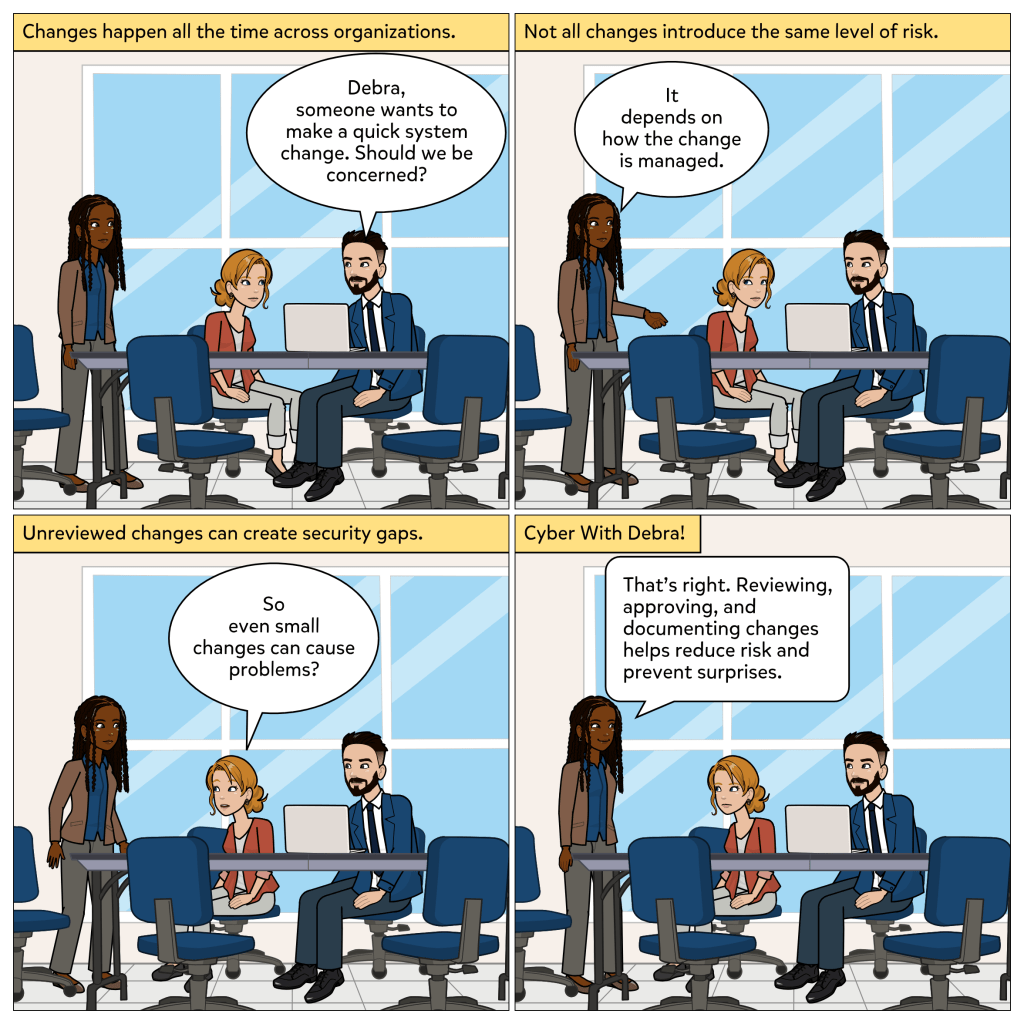
Changes happen constantly across organizations. Systems are updated, configurations are adjusted, and new tools are introduced to support business needs. While change is necessary, not every change carries the same level of risk.
That is why how a change is handled matters just as much as the change itself.
In this week’s comic, someone approaches Debra with a question about making a quick system change. The concern is not about whether change is bad, but whether it has been reviewed and managed properly. Debra explains that risk depends on how the change is handled, not simply the fact that a change is happening.
This is where change management comes in.
What change management means
Change management is the process of reviewing, approving, and documenting changes before they are made to systems or environments. The goal is to reduce unintended consequences and avoid introducing security gaps.
When changes are made without oversight, even small adjustments can cause issues. A configuration tweak, a permission change, or a software update can create vulnerabilities if no one is tracking what changed and why.
With proper change management, organizations can:
• Understand what is being changed and the potential impact
• Ensure changes are approved by the right people
• Document changes so they can be reviewed or reversed if needed
• Reduce unexpected outages or security exposures
Change management does not slow work down. It helps teams stay in control.
Why it matters
Many security incidents are not caused by attackers finding brand new flaws. They start with changes that were never reviewed or documented. An untracked system change can open access, disable protections, or break monitoring without anyone realizing it.
When changes are reviewed and recorded, teams can trace issues back to their source, respond faster, and prevent repeat problems. This is especially important in environments that handle sensitive data or support critical services.
Security depends on consistency. Change management helps maintain that consistency even as systems evolve.
Everyday takeaway
Think of change management like making adjustments to your home. You would not remove a door, change the locks, or rewire something without thinking through the impact. You would want to know what changed and why in case something goes wrong later.
Systems work the same way. Reviewing and documenting changes helps prevent surprises and keeps environments stable and secure.
Thank you for reading.
Change is constant, but how it’s managed makes all the difference.
Let me know what kinds of changes you see most often in your environment. 🧭
 Cyber With Debra!
Leave a comment