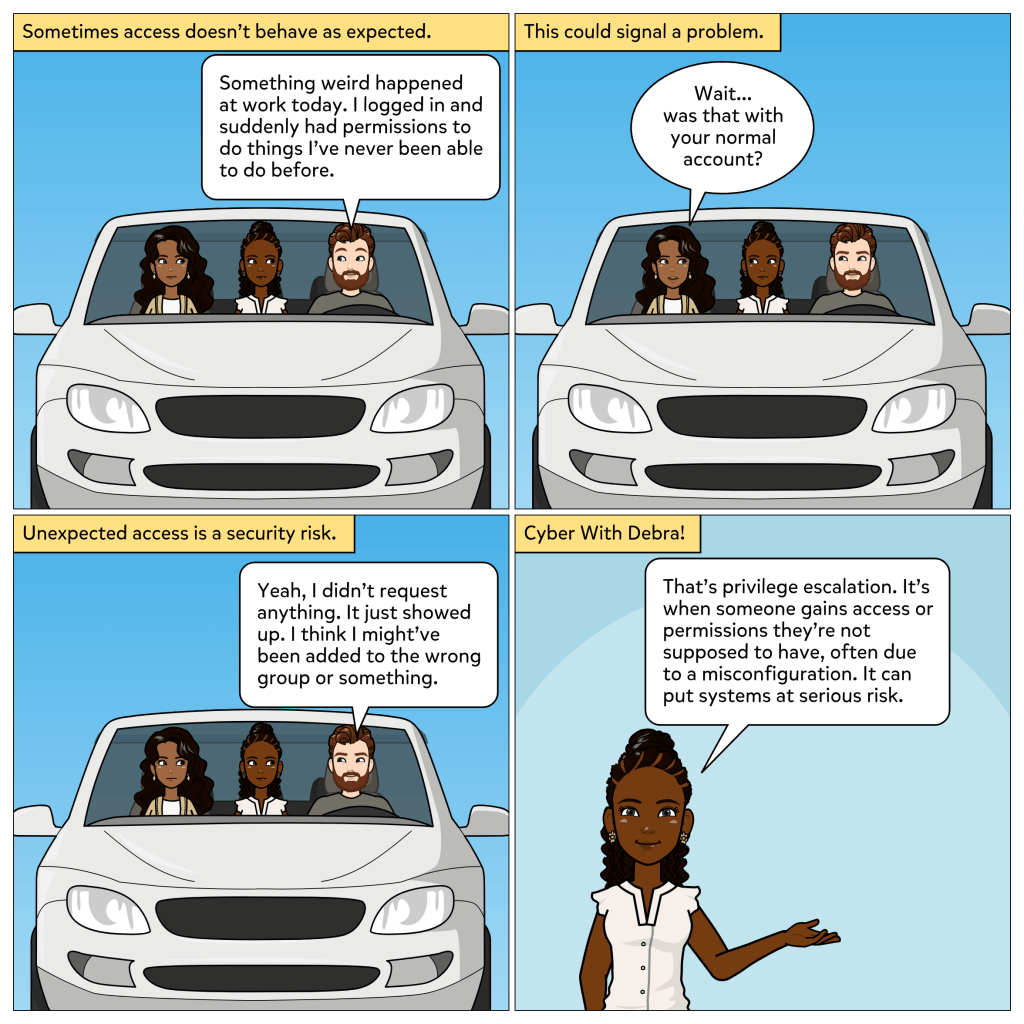
Access issues do not always show up as something being blocked. Sometimes, they show up as having access you were never supposed to have in the first place.
In this week’s comic, Jake shares something unusual that happened at work. After logging in, he realized he could suddenly do things he had never been able to do before. Nothing changed on his end. He did not request additional access. It simply showed up.
That kind of situation may seem harmless at first, but it points to something deeper.
What privilege escalation really means
Privilege escalation happens when someone gains access or permissions beyond what they are supposed to have.
This can happen in different ways:
• being added to the wrong group
• inheriting permissions from another role
• temporary access not being removed
• system misconfigurations
It does not always involve an attacker. Sometimes, it is the result of everyday system or process gaps.
Why it matters
Access controls are designed to limit what each user can see or do. When those controls fail, even unintentionally, it creates risk.
Unexpected access can lead to:
• exposure of sensitive data
• unauthorized changes to systems
• accidental or intentional misuse
• larger security incidents
The issue is not just that access exists. It is that it exists where it should not.
Everyday takeaway
If you ever notice access that does not feel right, it is worth pausing and reporting it.
Security is not only about getting access when you need it. It is also about recognizing when something does not align with what you should have.
Because sometimes, the risk is not being locked out. It is being let in too far.
Thank you for reading. I hope you are subscribed. Have you ever come across access that did not seem right? Let me know in the comments ⬆️


Leave a Reply