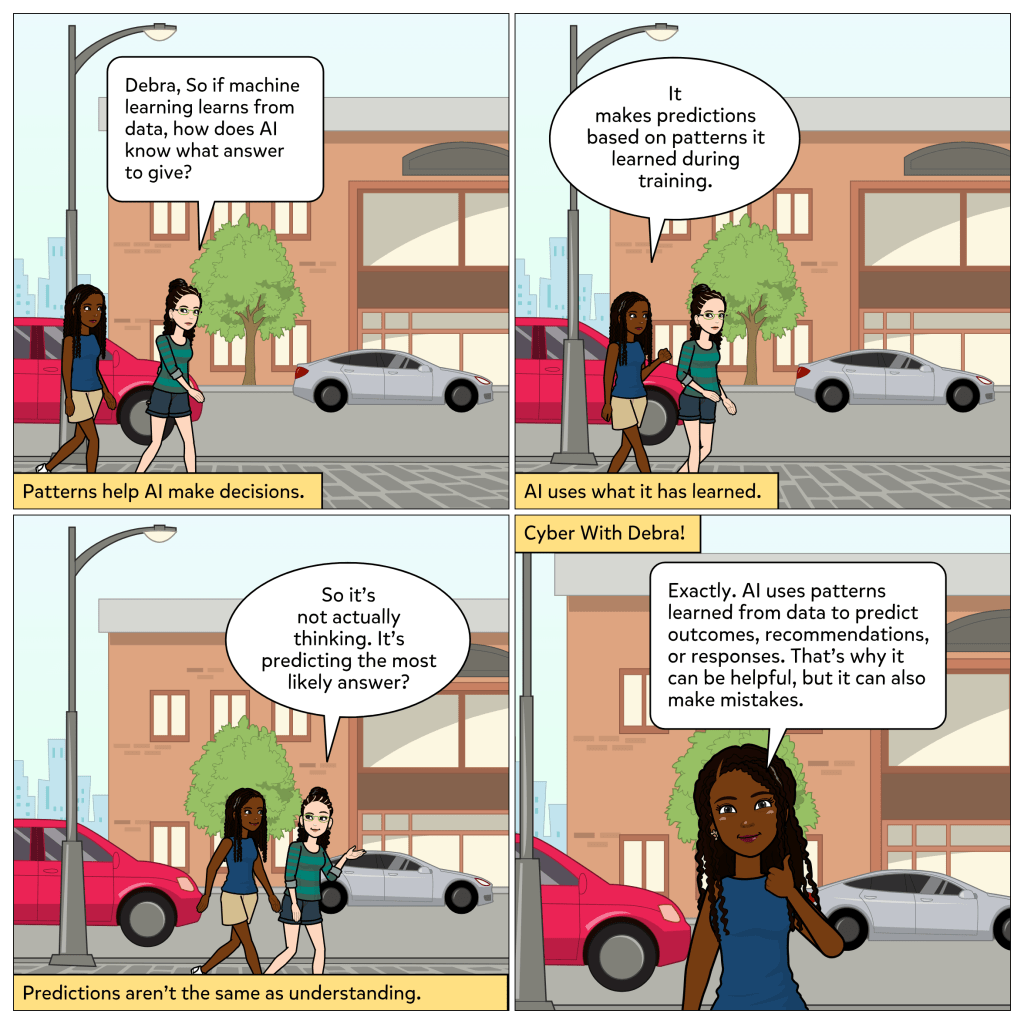
By now, we know that AI learns patterns from data. We also know that machine learning helps AI recognize those patterns. But another question naturally follows: How does AI know what answer to give? The answer is prediction.
How AI makes predictions
AI systems learn patterns from training data. Once they have learned those patterns, they use them to predict what is most likely to come next.
Depending on the task, that prediction might be:
• The next word in a sentence
• Whether an email is spam
• A product recommendation
• Whether an image contains a cat or a dog
• Whether activity on a network looks suspicious
The prediction changes based on the problem the AI is trying to solve.
Prediction is not the same as understanding
This is an important distinction. When AI generates an answer, it can seem like it understands what it is saying. In reality, the system is making predictions based on patterns it has learned from data.
That prediction may be helpful and accurate, but it is not the same as human understanding.
Humans use experiences, reasoning, and context. AI uses patterns and probabilities.
Why AI can make mistakes
Because AI relies on prediction, it can sometimes produce incorrect results. If the patterns in the data are incomplete or if the system encounters something unfamiliar, its predictions may be inaccurate.
This is why AI can occasionally give wrong answers while sounding very confident.
Understanding prediction helps explain both the strengths and limitations of AI.
Why this matters in cybersecurity
Prediction is also why AI is becoming useful in cybersecurity.
AI systems can learn patterns associated with:
• Malicious network activity
• Fraudulent transactions
• Phishing attempts
• Suspicious login behavior
• Malware characteristics
When new activity occurs, the system predicts whether it resembles patterns it has seen before and can help security teams identify potential threats more quickly.
Everyday takeaway
AI does not think the way people do.
It learns patterns from data and uses those patterns to predict outcomes, recommendations, and responses. The next time an AI tool gives you an answer, remember that it is not thinking through the problem like a person. It is making a prediction based on patterns it has learned before.
Thank you for reading. I hope you are subscribed. Before learning more about AI, did you think AI was reasoning through every answer the way people do? Let me know in the comments 🤖


Leave a Reply