Artificial intelligence has become a useful part of everyday life. From summarizing documents and drafting emails to answering questions and organizing information, AI tools can make many tasks easier. But have you ever stopped to think about what happens to the information you share with these tools?
Whether you’re entering a question, pasting text, or uploading a document, understanding how your information is handled is an important part of using AI responsibly.
What it means
AI data privacy refers to how personal, confidential, and sensitive information is collected, used, stored, shared, and protected when interacting with AI systems.
When you use an AI tool, the information you provide may be processed and stored according to the provider’s policies and your account settings. Some AI services may also use certain interactions to improve their models, while others offer settings or agreements that restrict how customer information can be used. This means not all AI tools handle your information the same way.
Why AI privacy settings matter
Different AI providers have different approaches to data privacy.
For example, an AI tool might retain your conversations for a period of time, allow you to control whether your information is used for model training, or provide additional privacy protections through a business or enterprise account. These differences matter because the information you share could include personal details, financial information, internal business communications, or confidential documents.
Before using an AI tool, it’s worth understanding what information it collects, how long it retains that information, and what privacy controls are available. A tool being convenient or widely used doesn’t automatically mean every type of information is appropriate to share with it.
What about using AI at work?
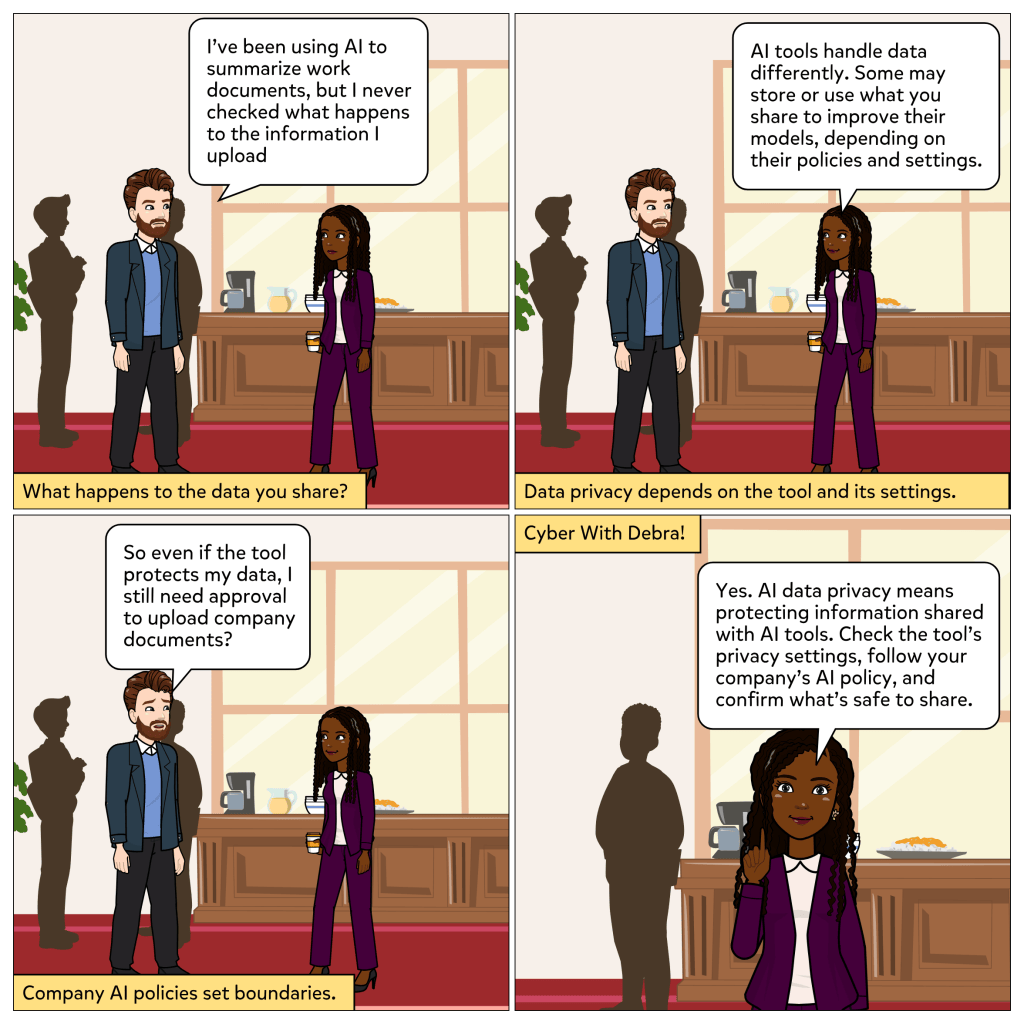
Imagine using an AI tool to summarize a company document. The tool may have strong privacy protections, but does that automatically mean you’re allowed to upload the document? Not necessarily.
Organizations may have AI usage policies that specify which tools employees can use, what types of information can be shared, and whether approval is required for certain activities. For example, a company might approve an enterprise AI platform for internal work while restricting employees from entering confidential information into personal AI accounts.
This is why the AI provider’s privacy policy and your organization’s AI policy serve different purposes. The provider’s policy explains how the service handles information, while your organization’s policy establishes what you’re permitted to share and how AI should be used at work. Both are important.
Why it matters in cybersecurity
Data privacy is an important part of cybersecurity because information shared with external services may be subject to risks involving unauthorized access, unintended disclosure, or improper handling. AI tools are no exception.
Sharing sensitive information without understanding the tool’s privacy protections or your organization’s requirements can create unnecessary security and compliance risks. This doesn’t mean AI tools should be avoided. It means they should be used with an understanding of their capabilities, limitations, and data protection practices.
Whether you’re working with customer information, internal reports, or personal records, knowing what you’re sharing and where it’s going helps you make more informed decisions.
Everyday takeaway
AI tools can be incredibly helpful, but convenience shouldn’t come at the expense of privacy.
Before sharing information with an AI system, consider how the tool handles your data, review its privacy settings, and be mindful of whether the information is sensitive. If you’re using AI for work, remember to follow your organization’s AI usage policy and confirm what information is approved for sharing.
Protecting your information starts with understanding what you share and how it’s handled.
Thank you for reading. I hope you are subscribed. Have you ever checked the privacy settings of an AI tool before sharing information with it? Let me know in the comments 🔐


Leave a Reply